

Cromwell Road, South Kensington
Events at the Natural History Museum
Alfred Waterhouse’s terracotta cathedral to nature opened on Cromwell Road in 1881, and Hintze Hall, with Hope the blue whale diving the length of it, is the grandest hall in London you can lay a table in. We have produced a wedding reception beneath the whale, with an orchestra on the staircase and the drinks among the fossils next door.
- Where
- Cromwell Road, SW7South Kensington, between the V&A and the Science Museum
- Hintze Hall
- 1,200 standing650 seated, or 450 with a dance floor
- Earth Hall
- 400 standing200 seated, beneath the Earth sculpture
- Darwin Centre
- 350 standing150 seated, atrium and courtyard
- Garden Kitchen and Gardens
- 300 standing100 seated, indoors and out
- The whole Museum
- Up to 3,000A reception with Hintze Hall at its centre
Capacities as published by the Natural History Museum.
Cromwell Road
Arriving under the towers
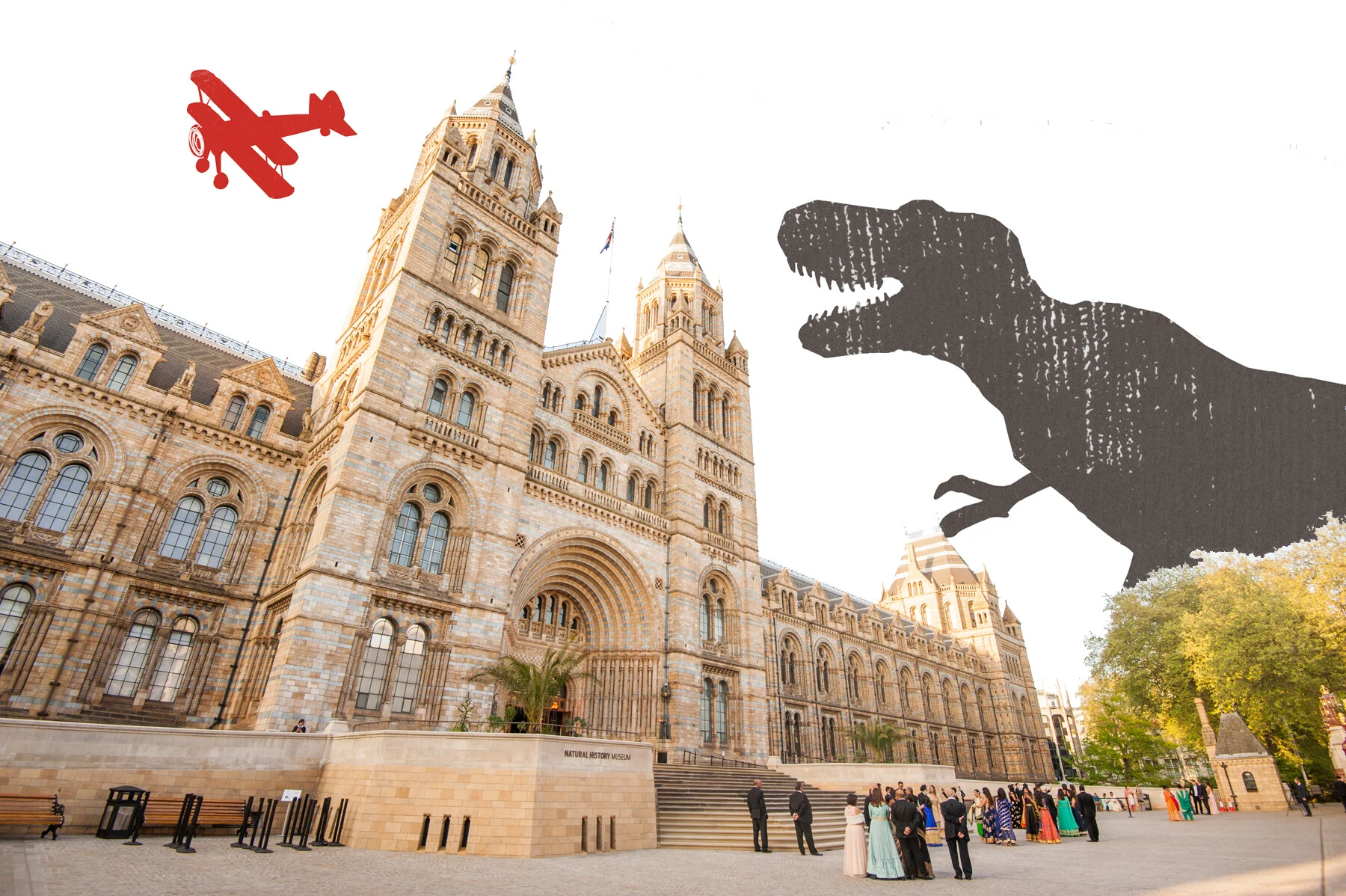
Guests arrive the way the public does, up the steps off Cromwell Road and through the great round-arched door between the two towers, with the name of the building cut into the wall beside them. There is no better front door in London for an arrival, and once the Museum closes at 18:00 the whole of it is yours.


Hintze Hall
Tables beneath a twenty-five metre whale
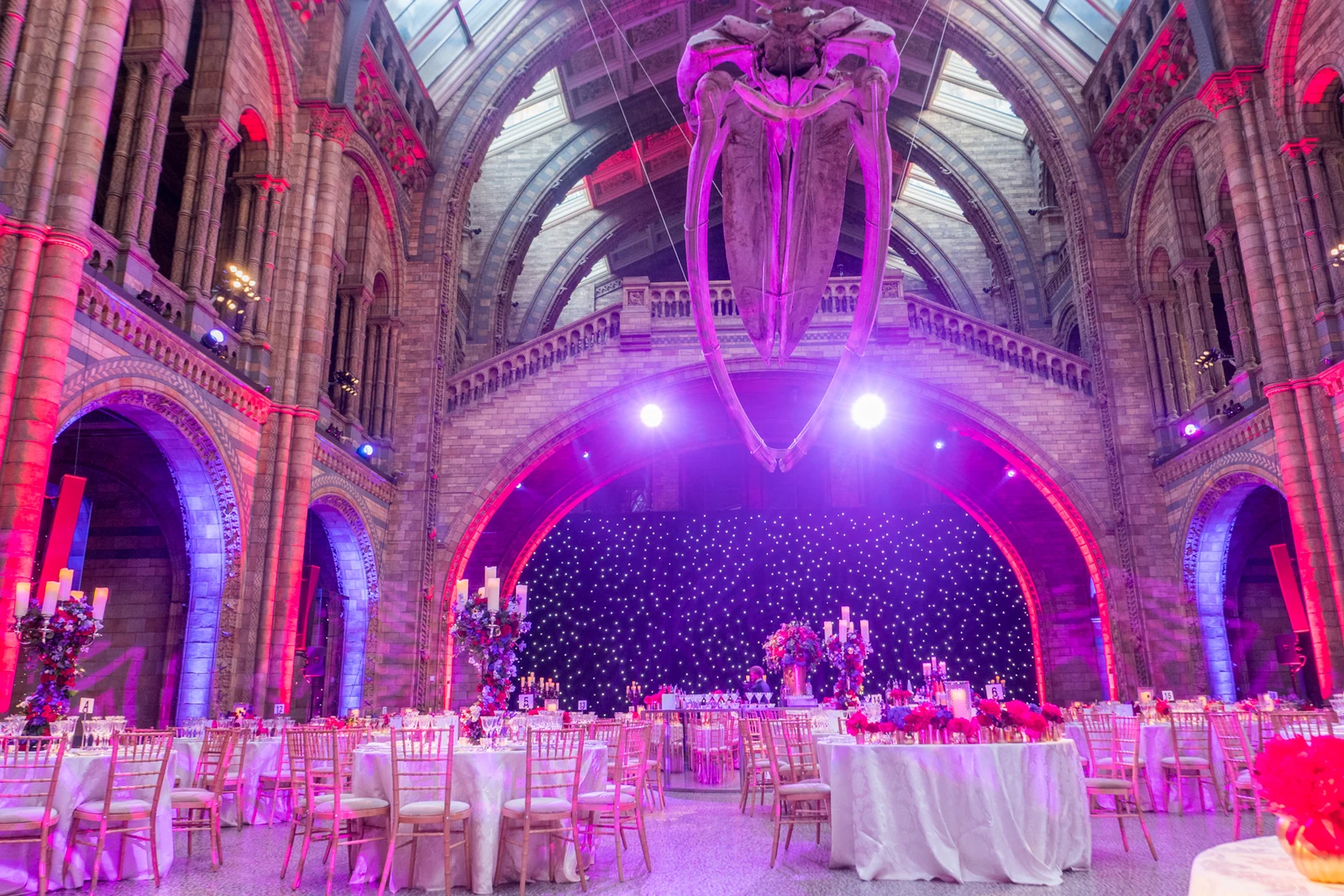
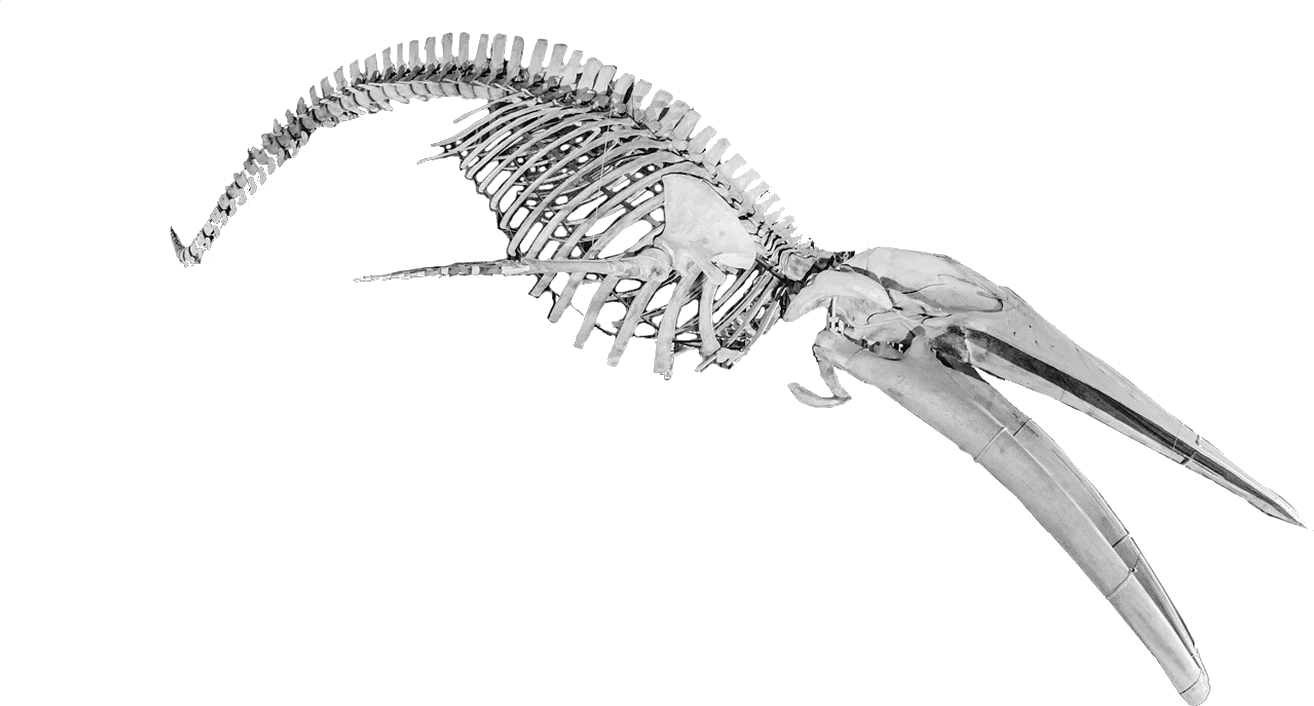
Hintze Hall is the hall you walk into off Cromwell Road: Romanesque arches on both sides, the stone staircase rising at the far end with Darwin seated at the top of it, and Hope, the 25-metre blue whale skeleton, suspended over the whole length. The Museum lists it at 1,200 standing and 650 seated, and it is the central hall of a reception for 3,000 when the galleries open up around it.
For the wedding we laid it from the entrance to the foot of the stairs. Long tables ran up the centre of the hall and rounds sat between the piers, a starcloth closed the great arch, and the stone was lit pink and violet from the floor so the whale glowed above the tables.


The staircase
An orchestra on the steps beside Darwin
The staircase at the end of the hall is the stage the building gives you, and it is a very good one. We seated a full orchestra on the steps either side of the Darwin statue, timpani on the landing above, and later put a singer on the same steps with candles lit the whole way up. Every seat in the hall can see it.


The floor
A white floor at the foot of the stairs
The white dance floor went down at the foot of the staircase, with the cake standing on it in the open and the band and the DJ working from the steps above. From the floor, the arch, the starcloth and the whale line up in one view. Every guest took that picture.

Fossil Way
Drinks among the marine reptiles
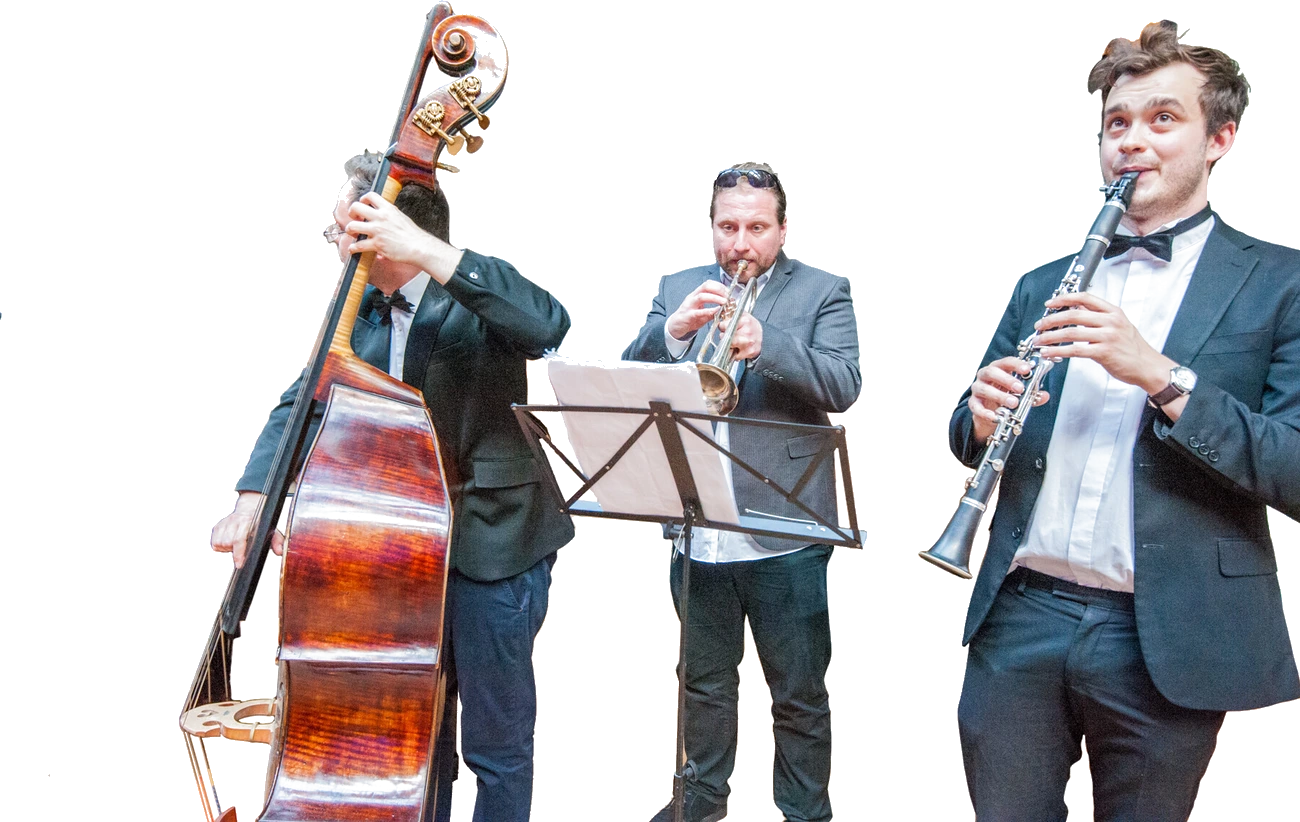
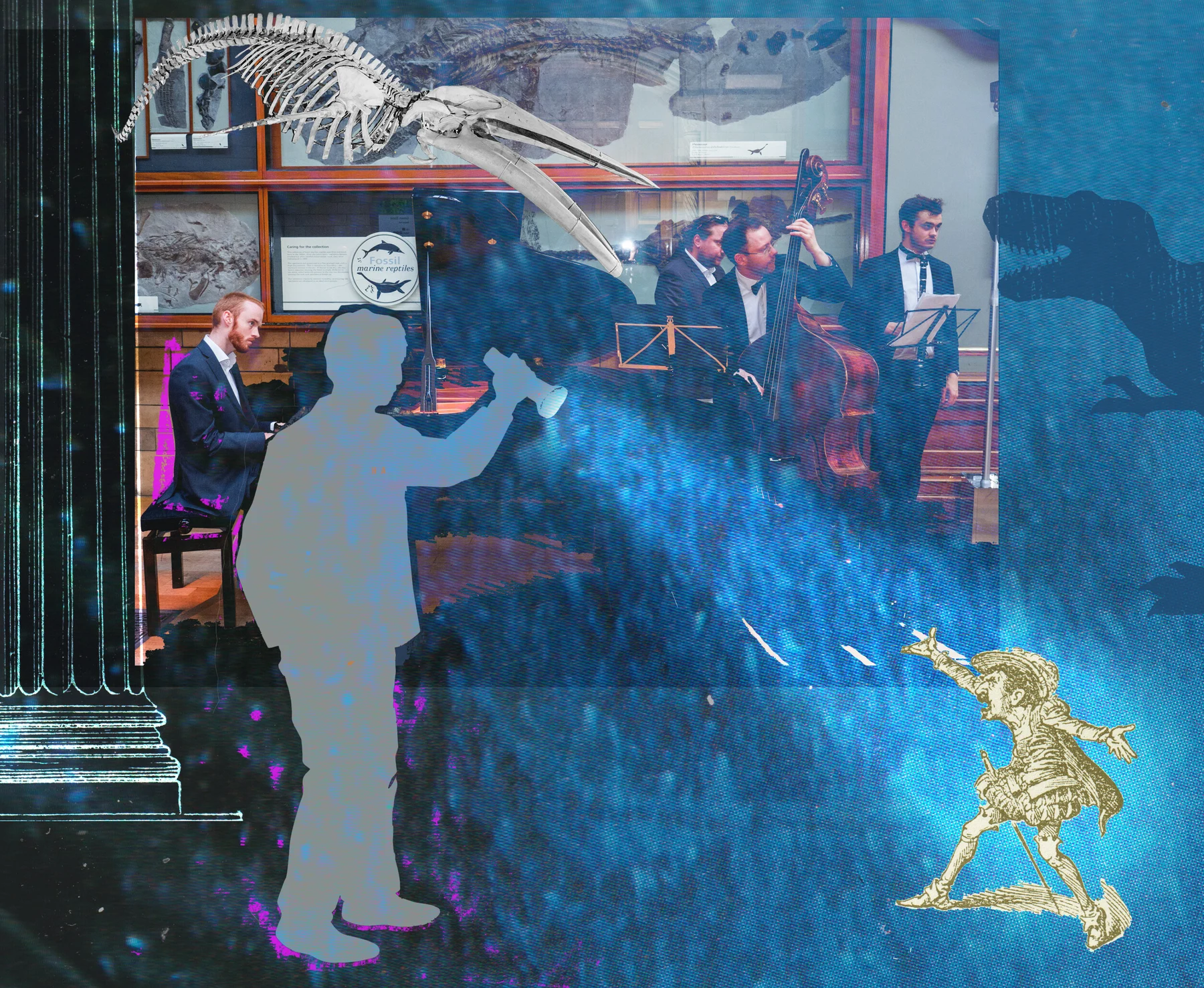
The Museum opens Fossil Way or Dinosaur Way for the drinks before Hintze Hall. Fossil Way is the gallery with the ichthyosaurs and plesiosaurs set into the walls, and it takes a crowd beautifully. We put a piano trio under the fossils and hung the seating plan from a blossom tree beneath the glass roof, so the guests found their names in the branches.


On the table
Roses, sweet peas and crystal on cream damask
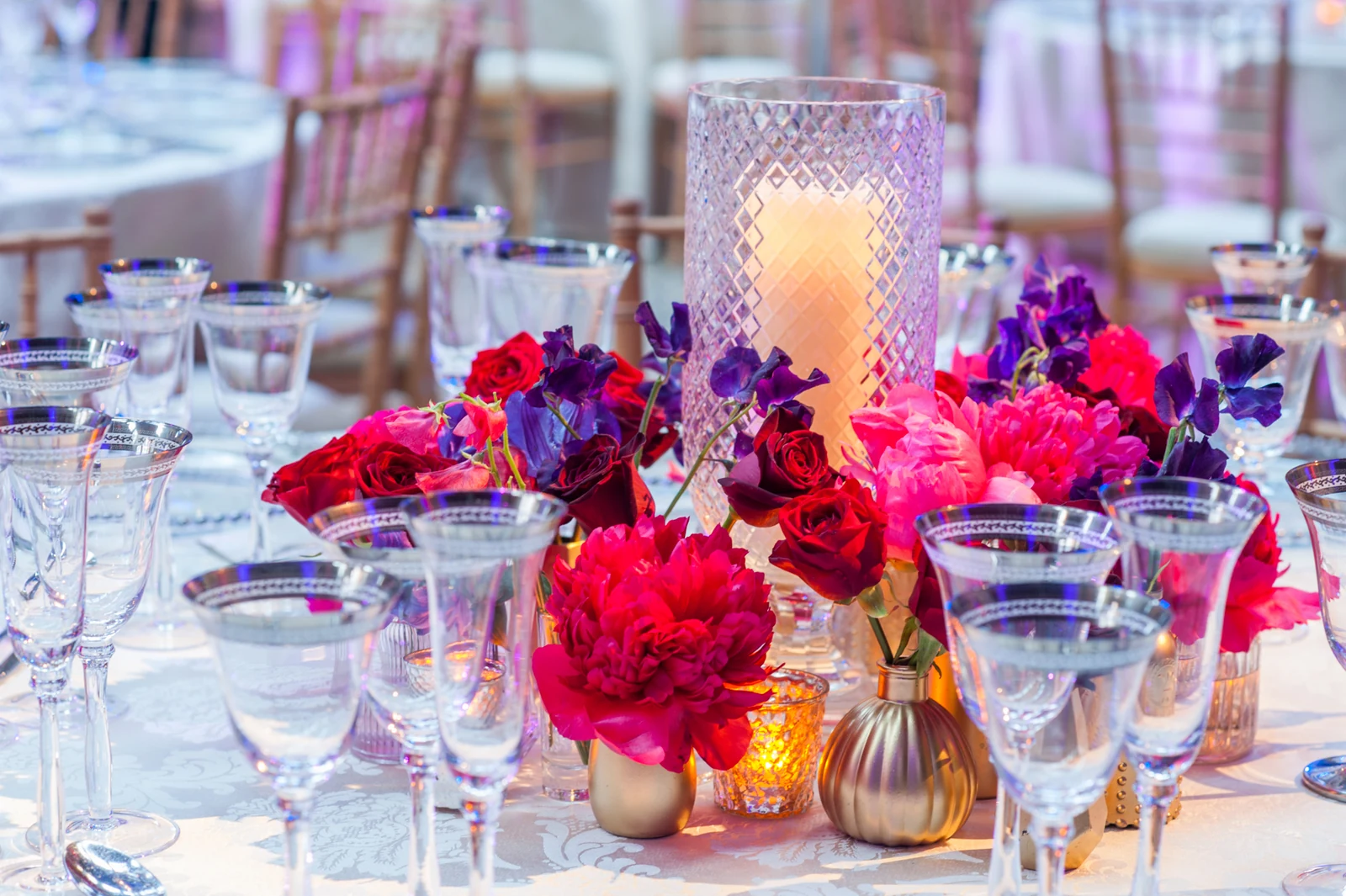
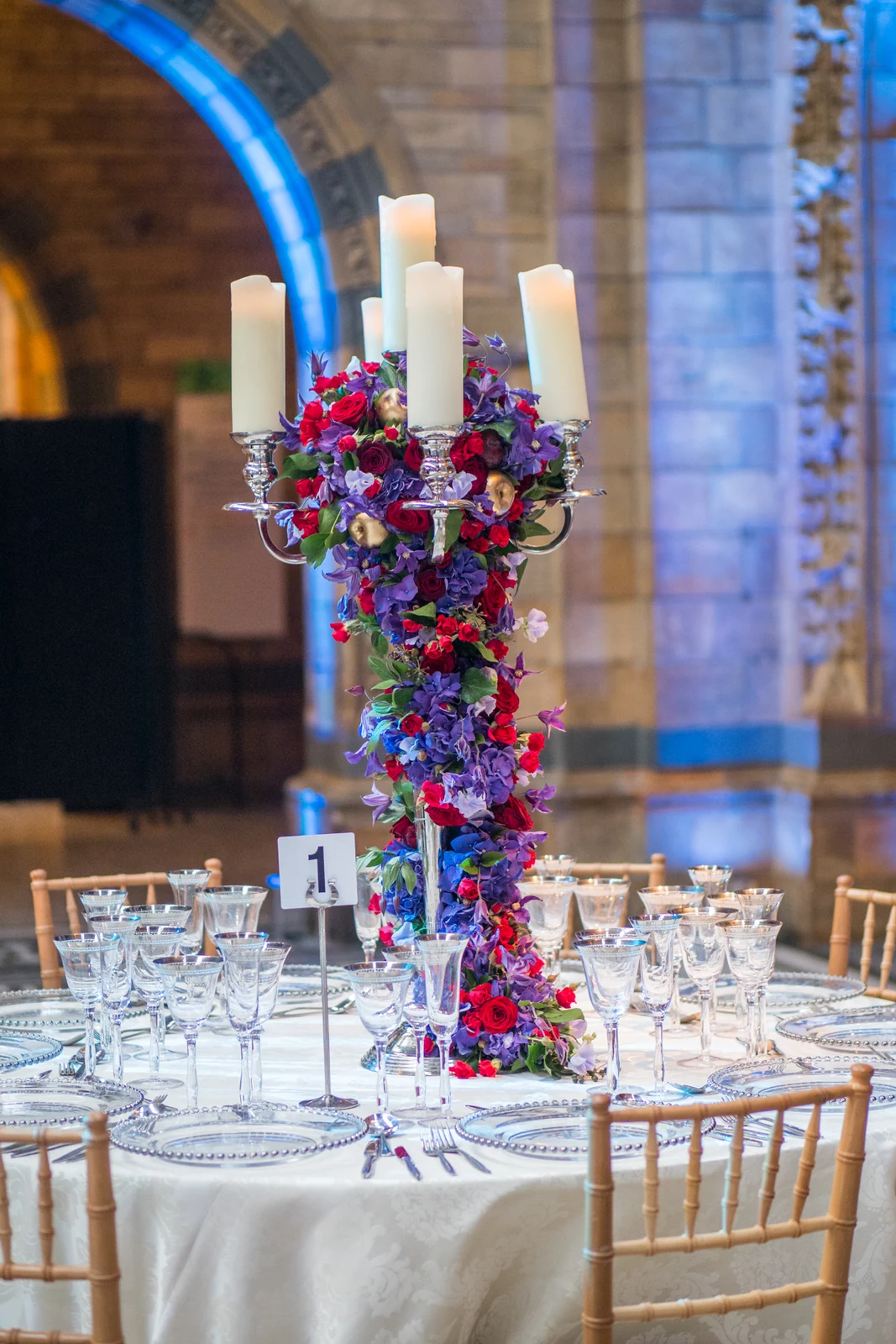
The flowers were red roses, purple sweet peas and hydrangea with blue delphinium, in gold bud vases along the long tables and in tall candelabra on the rounds. Cream damask cloths, beaded charger plates, gold-rimmed glassware and gold chairs, so the colour came from the flowers and the light and nothing fought the building.


The small flowers
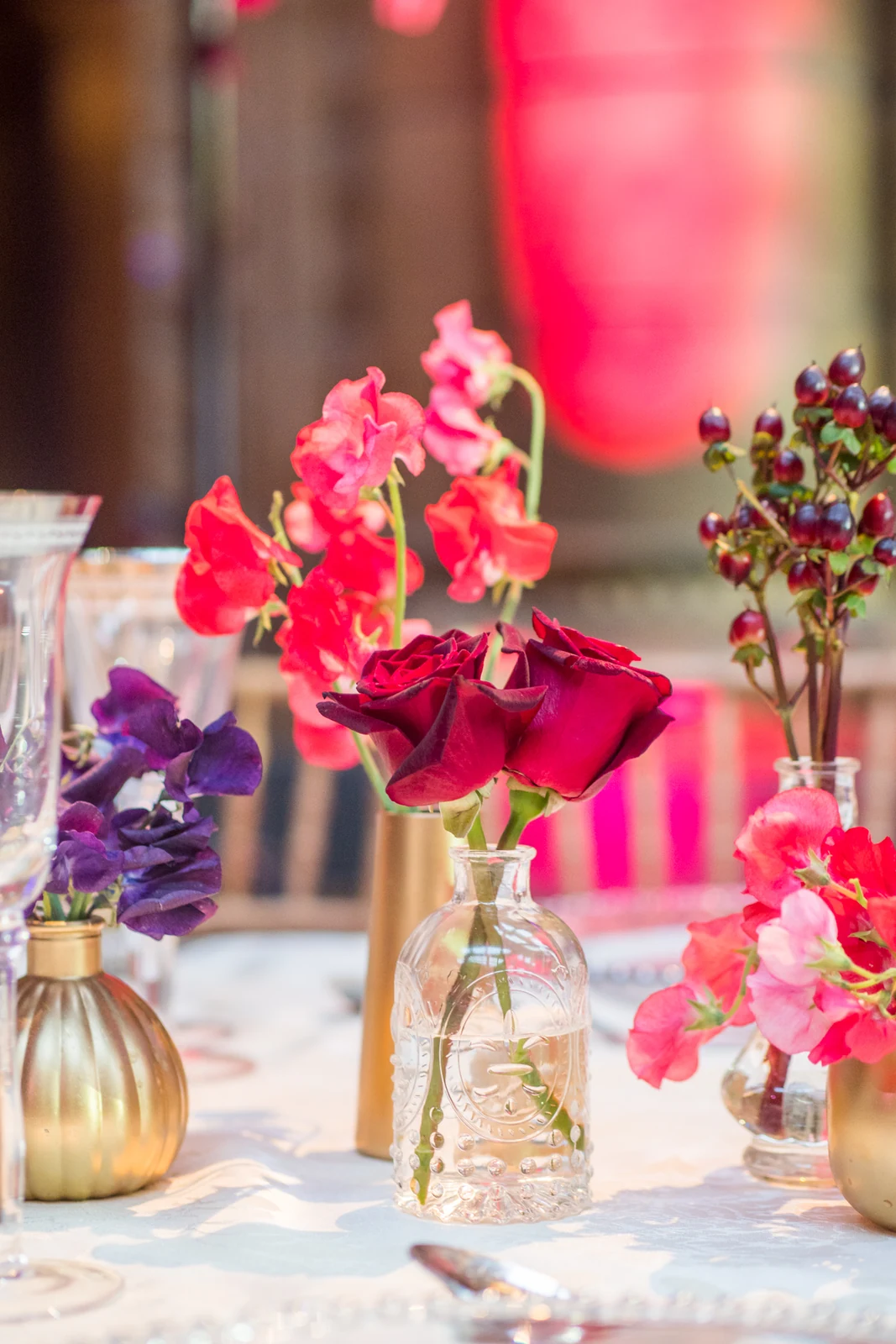
Along the long tables the flowers sat low, in gold and clear glass bud vases, so nobody had to talk around them. Red roses, pink and purple sweet peas and a few dark berries, repeated the length of the hall.
An Immersive Ancient World
A Night at The Museum
In the heart of London’s Natural History Museum, you are swept into an 8-hour, after-dark odyssey where exhibits awaken and time unravels. From roaring dinosaurs to distant galaxies, each room becomes a live chapter, brought to life through immersive theatre, scent, touch, and taste. This isn’t just dinner. It’s history, alive. It’s a Night at The Museum.
Designed for a fully immersive A Night at The Museum for 50 guests, across Hintze Hall, the Dinosaur Gallery, the Minerals Gallery, Earth Hall and the Darwin Centre. Seven scenes, each with its own course, and the artwork we drew for each of them.

Scene One
“The Awakening”
Beneath the towering skeleton of Hope in Hintze Hall, the experience begins. Shadows stretch. Music hums low. A ghostly curator from another era welcomes you into a world where relics stir and history breathes; she explains the “rules” of this unusual experience and invites you to follow her into the shadows for a journey through history. The scent of old archives fills the air. This is no ordinary experience. This is the beginning.
Scene Two
“Land of The Giants”
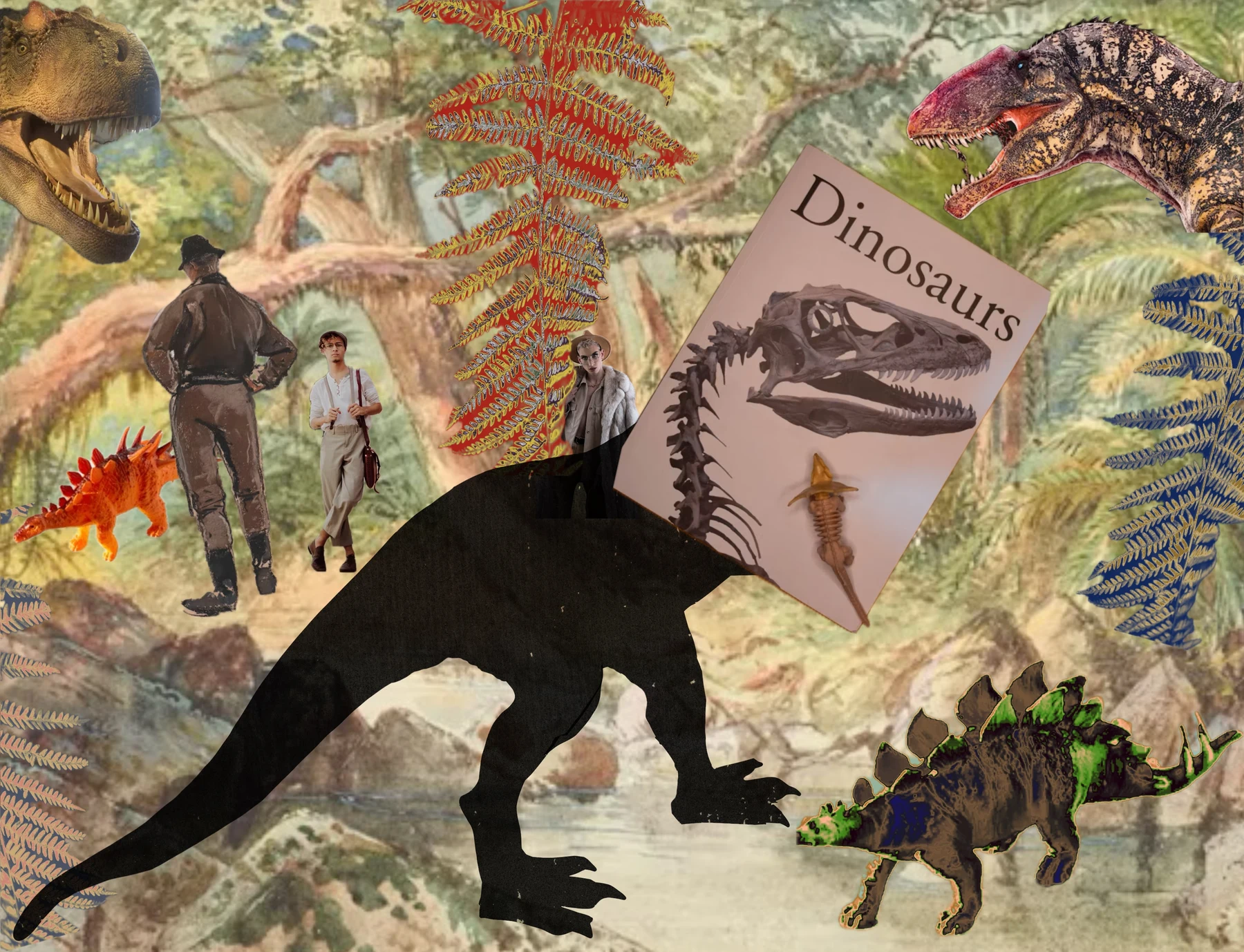
In the Dinosaur Gallery, the ground rumbles. Roars echo. Shadows of giants sweep across the walls. Led by a dusty “palaeontologist,” you navigate a prehistoric jungle thick with the scent of earth, moss, and pine. Stay on the path, your bracelet will buzz when danger’s near. Something ancient is watching.
Scene Three
“The Pharaoh’s Banquet”
Bathed in golden light and the scent of frankincense, guests dine as hieroglyphs whisper across the walls. An Egyptian priestess blesses the feast in ancient tongue, honouring gods long past. Spices, honey, and incense fill the air, as scented linen napkins reveal sacred symbols beneath your fingertips. This is no meal – it’s a ritual.

Scene Four
The Medieval World: “Feast of the Ages”
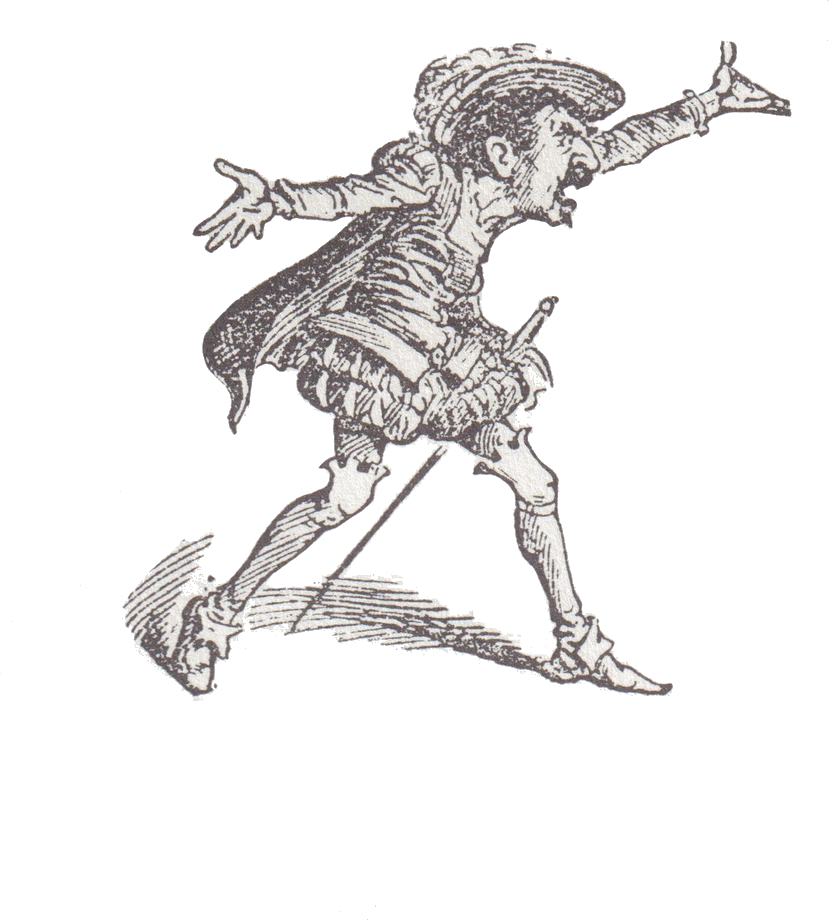
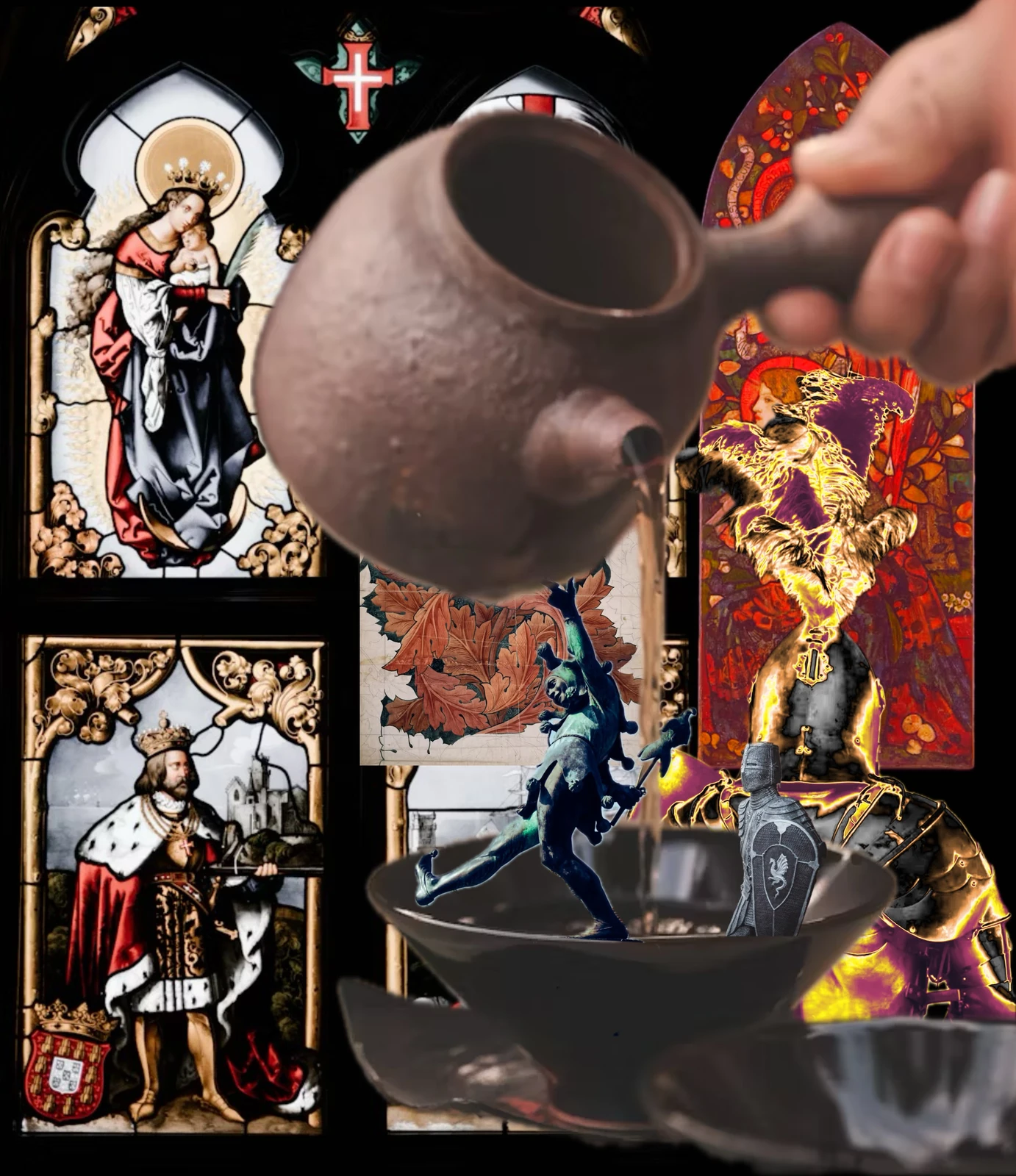
From one world to another, we step into a medieval banquet in the Minerals Gallery, aglow with candlelight, draped in tapestries, and alive with chants. A knight recounts epic battles, a jester spins tales and tricks, and the scent of woodsmoke lingers in the air. With leather-bound menus and wooden chalices in hand, you’re invited into Medieval history to dine like royalty in a world long past.
Scene Five
The Space Age: “Stardust and Beyond”
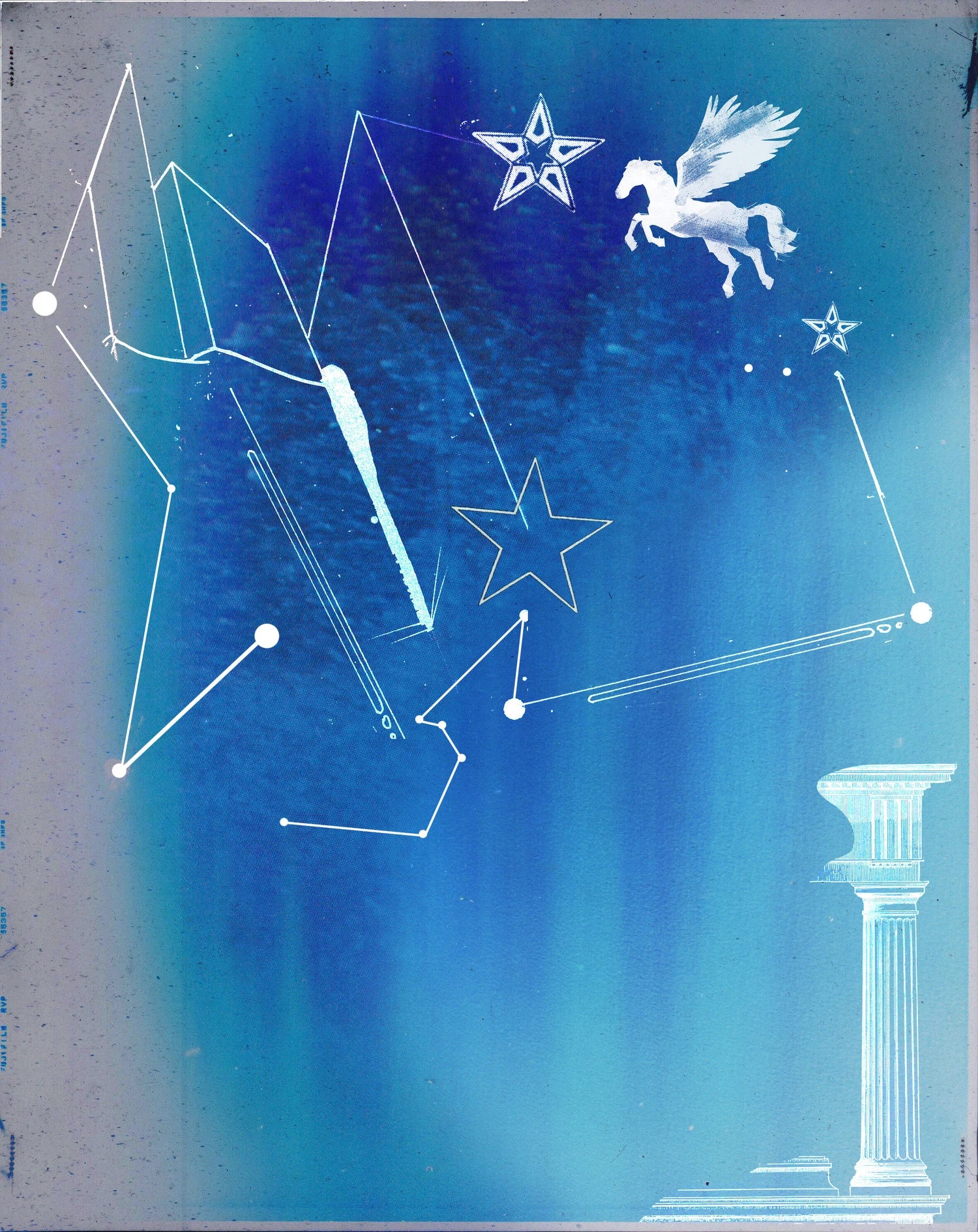
In Earth Hall, beneath drifting planets and starlit skies, we float through space. Blue and violet light shimmers. Interstellar winds whisper. A futuristic “astronaut” shares stories from the edge of the cosmos. Metallic scents fill the air, and smooth meteorite stones in your palm keep you grounded as you journey through the stars.

Scene Six
“The Future of the Planet”
Inside the Darwin Centre’s lush, futuristic greenhouse, nature meets technology. Birds sing, drones hum, and a passionate conservationist calls for action in a world on the brink. Surrounded by vines, and soil-scented air, guests are challenged to rethink their role in Earth’s story – and its survival.

Scene Seven
Farewell and Reflection
Guests are led back to the main hall for a final toast under the whale skeleton. Here, the curator reappears, thanking them for traveling through time and urging them to remember that they are part of this ongoing history. With a final round of “whale song” and ambient sounds, the guests leave, having journeyed through time, space, and the depths of the museum in a single unforgettable experience.

The spaces
Seven halls and galleries, and the whole Museum
The Museum hires these, and the figures are its own. Twelve of its spaces are licensed for a wedding ceremony or a civil partnership. For anything over the capacity of one hall, the galleries open around Hintze Hall and the whole building takes 3,000.
- Hintze Hall
- 1,200 standing · 650 seated, 450 with a dance floor, 450 for a ceremony with Fossil Way
- Earth Hall
- 400 standing · 200 seated, Sophie the Stegosaurus and the Earth sculpture, the Earth Galleries beyond for the drinks
- Darwin Centre Atrium and Courtyard
- 350 standing · 150 seated, glass, steel and white limestone, indoors and out
- Garden Kitchen and Gardens
- 300 standing · 100 seated, daylight, the gardens outside the doors
- Wildlife Photographer of the Year
- 300 standing · a private view of the exhibition, October to July
- Images of Nature Gallery
- 80 seated · 40 for a ceremony
- Earth’s Treasury
- 25 for a ceremony · among the gems and minerals
- The Anning Rooms
- 20 for a ceremony · the smallest of the licensed spaces
- The whole Museum
- Up to 3,000 · a reception with Hintze Hall at its centre and the galleries open around it
The hire fee, and our fee on top
The Museum is a dry hire: the building, the date and the hours, with everything else brought in through its approved suppliers. Our fee and the design budget sit on top of that, and we handle the Museum’s requirements as part of the production. How to budget for an immersive experience sets out the three levels of investment and what each one buys.
What to know before you write to us about the Museum
Which parts of the Natural History Museum can be hired?
Hintze Hall, Earth Hall, the Darwin Centre atrium and courtyard, the Garden Kitchen and Gardens, the Wildlife Photographer of the Year gallery, the Images of Nature Gallery, Earth’s Treasury and the Anning Rooms, with Fossil Way and Dinosaur Way for the drinks before Hintze Hall. Twelve spaces are licensed for ceremonies.
How many people does Hintze Hall take?
1,200 standing and 650 seated, or 450 seated with a dance floor, on the Museum’s own figures. With the galleries open around it the Museum takes a reception of 3,000.
What time can guests arrive?
The Museum closes to the public at 18:00 and our build begins the moment it does. Guests arrive from 19:00, and the main hall opens at about 19:45 once the drinks in Fossil Way are done. The hire runs to 12am as standard, and we extend it to 1am, 2am or 3am when the brief calls for it. Anyone in the gardens comes indoors at 22:00.
Can we hold the ceremony there?
Yes. Twelve spaces are licensed. Hintze Hall with Fossil Way takes 450 for a ceremony, the Darwin Centre 150, the Images of Nature Gallery 40, Earth’s Treasury 25 and the Anning Rooms 20.
Where else do you produce at this scale?
We are an accredited partner to Westminster Abbey, we are listed at Waddesdon Manor, LSO St Luke’s and Hotel Café Royal, we have built across the courtyard, galleries and terrace of Somerset House, and we have produced inside Blenheim Palace. We are accredited at Lindley Hall, the Royal Horticultural Society’s hall in Westminster, as production partner and caterer.
Tell us which hall you have in mind
Or just the date and the number of people. The rest is what we do.