Multi Sensory Dining, The Way We Build It
Sound, Scent, Touch And Taste, Designed Together
Sight, smell, sound, touch and taste are everything that is delightful about being human. A multi sensory dining experience is a meal that uses all five on purpose, and this is how we build one.
Every time we taste something new we lay down a kind of sensory bookmark, a reference point we return to the second, third and fourth time it crosses our path. That private catalogue is what makes a favourite dish a favourite, and it is what we design with. A course is never only a plate. It is a sound, a scent, something in the hand and a story about where it came from, and when those are decided together the table starts to taste of the place it is in.
The Senses In Figures
Taste Happens Mostly Through The Nose
There is little more satisfying than a favourite dish or a good glass of wine, and the nose is doing more of that work than most people ever notice. Smell adds the notes that decide whether a plate reads as a success before a fork is lifted, and sound and touch shape the rest. Once you accept how much of taste never happened on the tongue, the interesting question is what happens when you add an unexpected sense to the plate on purpose.
We have put that question to sceptics and to the openly curious, and the results are intensely personal. One guest tastes the change at once, the guest beside them needs the second course to believe it, and the most striking reactions come from the people who arrive ready to play. Our immersive food experiences are built on that willingness.
Sound Can Turn A Glass Of Champagne Bitter
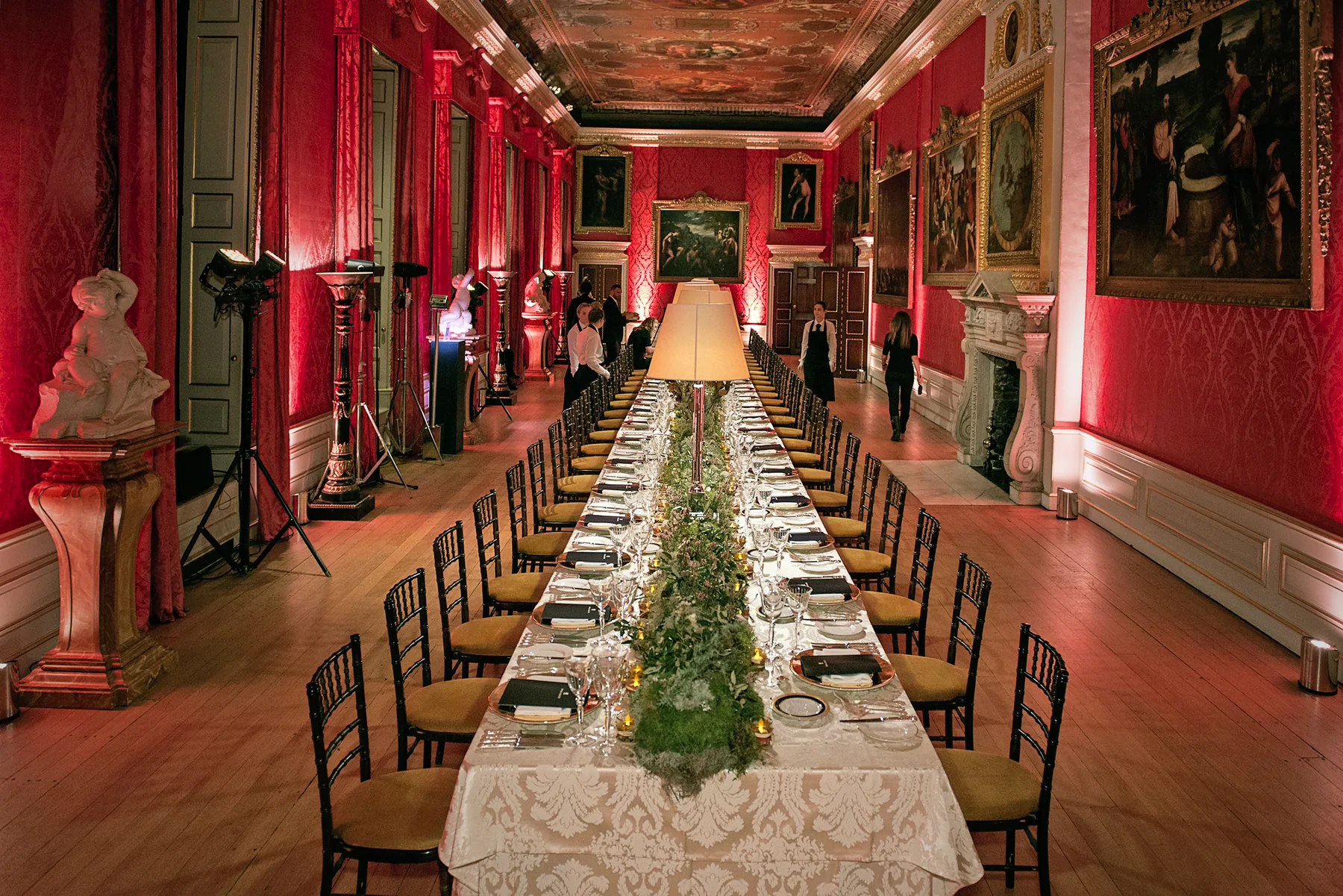
Frequency changes what you taste. High and low notes can make dark chocolate and roasted coffee read sweeter or more bitter depending on what is playing nearby, and we use that with intent. At Kensington Palace, for Royal Salute, guests sipped champagne flavoured with molecular bubbles of chocolate while a string trio played high and low frequencies, and the same glass moved from sweet to bitter in their mouths. Nothing had been added. The sound did it.
What a place sounds like is planned with the menu, course by course. Smoked oyster and chanterelle soup arrived with the soundscape of the pine forest around Balmoral. Seared scallops with samphire came with the sound of wind, and fans filled the gallery so the coast arrived with the plate. Sound is decided while the design is still on paper, with everything else.
Every Course Arrives With A Scent
Scent gets treated the way a kitchen treats salt. For Royal Salute the first thing in every guest’s hands was a warm towel scented with gunpowder and flint, the smell of the twenty-one gun salute they had watched at the Tower of London that morning. Each course then came with a cotton napkin carrying a scent chosen for it: black Lampong pepper with the venison, sage and sea salt with a malted barley and seafood risotto, and frankincense with the final dark chocolate and candied spice.
Whisky works the same way. A spritz of it over a risotto, with scallops and sea vegetables and the sound of wind, carries a whole table to the shoreline for the length of a course.
Touch Starts With What You Are Holding
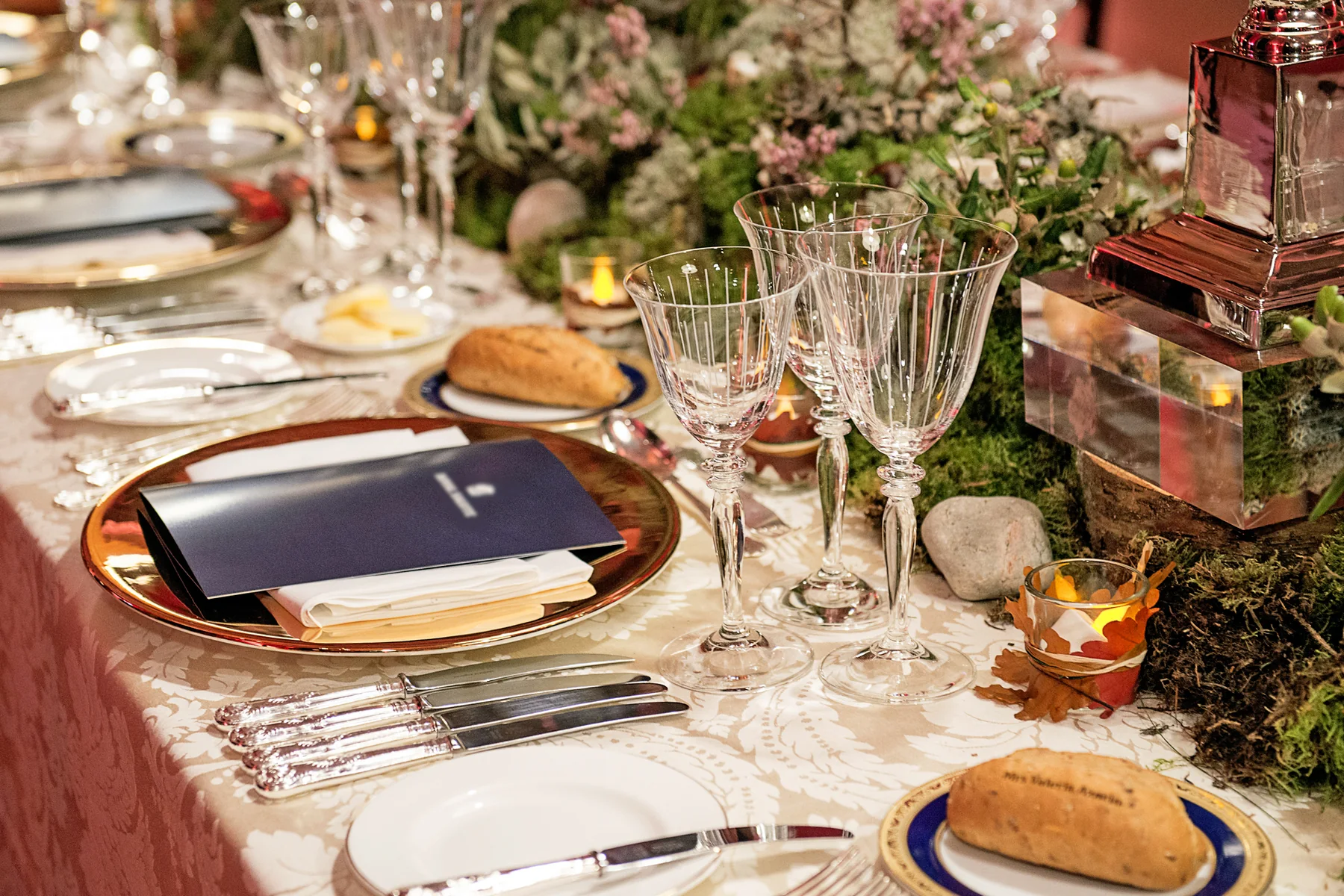
The hand tastes too. At Kensington Palace the soup was served in cups lined with blue velvet, and the softness in the fingers made the soup creamier in the mouth. Guests found their seats by discovering their own name laser cut into a barley bread roll, and foraged the pickled mushrooms planted along the table. Crispy chicken skin was stretched into fallen leaves and served on dried foliage; quail’s eggs filled with caviar and truffle sat inside split logs.
You can test the principle at home. Eat a piece of dark chocolate while running your fingers over sandpaper and notice how much grittier the chocolate seems. The brain is doing far more of the tasting than the tongue, and once you have noticed it you cannot stop noticing it.


The Kitchen Goes Wherever The Story Is
We provide the whole kitchen, the hire, the serviceware and every piece of equipment, so the table can be laid in a venue’s own kitchen or in a place that has never had one. For Dinner Under The Stars, a banquet for 150 in a private woodland, the kitchen was an open fire in the clearing, and the smell of the coals and the sound of the flames were as much a part of the design as the chandeliers in the trees. Whole turbot came to the table on the bone with sea herbs, and the scallops arrived on strips of bark cut for them.
That is the point of cooking on site. A riot of colour, sound and smell from an open kitchen is an extraordinary sensory experience in itself, and large sharing plates, silverware and natural props carry it to the table.
You are, quite literally, a cornucopia of creative wonders! How do you do it?
A guest at Dinner Under The Stars
The Menu Is Written To The World
Each menu is designed for the world it sits inside. For Rolls-Royce Black Badge, in the vaults beneath the Royal Society of Arts, every course reflected a different physical, emotional and thrilling aspect of driving the car, and the history of the marque. For Royal Salute the whole meal was a physical interpretation of one whisky, down to a passion fruit and mandarin jelly shaped on the orb of royal power. The food is developed with the chef around the story, and the Gastronomic world shows how far that can go.
Dietary needs and allergens are planned with the same care, and the menus are written creative-first. There is no limit on numbers: we will cook for two as comfortably as for thousands. For any dining experience we produce, a tasting is offered, and tastings are always charged for.


What It Costs, And Where To Start
Every multi sensory dining experience is designed and costed from nothing, so there is no per head figure to hand you. Sound, scent, the kitchen on site and the people to run it each change the sum, and our guide to budgeting for an immersive event walks through where the money goes.
Send a date, a rough number of guests and what you want it to taste like through our enquiry form. If a venue gave you our name, say which one, so we know what kitchen we will be working in.
Also in the JournalFundraising Event Ideas That Raise More